Your AI Assistant Has Never Seen COBOL: Legacy Code Meets the Hallucination Machine
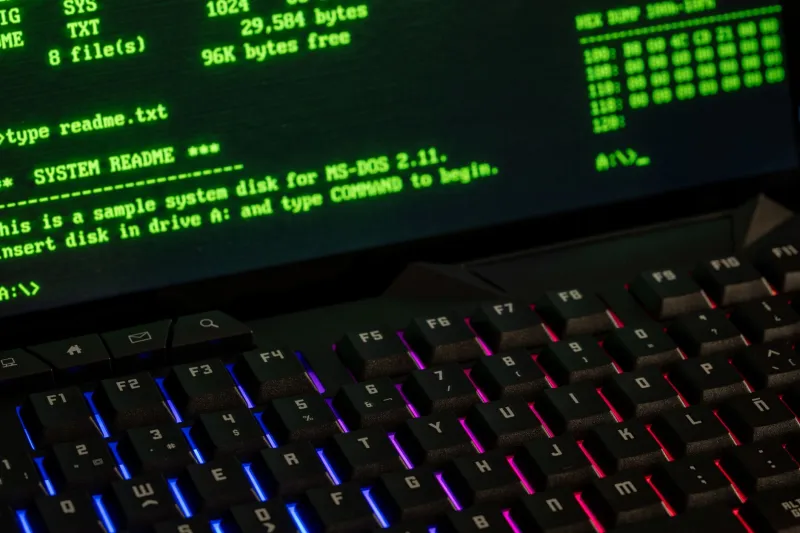
There's a joke making the rounds on engineering teams from Columbus to Dallas: your AI pair programmer is a brilliant new hire who read every book published last year and none published before 1995.
Funny until you're the one pointing it at the claims-processing system your insurance company has run since the Reagan administration.
That's the quiet reality of AI-assisted development in enterprise America. The demos are dazzling on greenfield React apps. But the majority of code that actually keeps American businesses running — the mainframe batch jobs, the VB6 internal tools, the Java 6 monolith nobody wants to name — lives outside the comfortable center of an LLM's training data. And when the model gets there, things get weird.
The Confidence Problem, Cranked to Eleven
Every developer knows an LLM will occasionally invent a function that doesn't exist. In a modern framework, that's annoying but recoverable — the compiler yells, you fix the import, you move on.
Legacy code flips the dynamic. The failure mode isn't a missing import; it's the assistant suggesting a method call that used to exist in a library version your company abandoned in 2011. Or worse: it proposes an API from a forked internal library it can't possibly know about, delivered in the same calm, confident tone it uses for everything else.
The result is what one fintech engineer I spoke with described as "plausible garbage at scale." The code looks right. It's formatted well, named well, structured well. It just doesn't run — and on a system with no test suite and one maintainer who retired in 2019, you might not find out until payroll night.
When 'Modernization' Means Sabotage
The subtler danger isn't hallucination. It's helpfulness.
Ask an assistant to refactor a gnarly legacy module and it will happily do so — stripping out that bizarre retry logic that compensates for a mainframe quirk, collapsing the redundant-looking validation that exists because of a state regulator's letter from 2003. Nothing in the code explains why it's written that way, so the model treats it as noise. And noise, to an optimizer, is something to be removed.
This is the institutional knowledge trap: legacy code encodes decisions that were never documented, and an LLM can't infer intent that was never written down. It pattern-matches against everything else it's seen and concludes the weird thing is a bug. Sometimes it is. Sometimes it's the only thing standing between your company and a compliance nightmare.
What Careful Teams Are Actually Doing
The teams navigating this well aren't avoiding AI tools — they're fencing them in. A few patterns keep showing up:
Sandbox first, always. Run the assistant's output through the actual build and test pipeline before it touches anything real. In legacy shops without tests, some teams are writing characterization tests specifically to give the AI a guardrail — the tests exist less to verify correctness than to scream when behavior changes.
Treat the model as a reader, not a writer. One of the highest-ROI uses of AI on old code isn't generating changes — it's explaining them. Asking an assistant to summarize what a 3,000-line stored procedure does, or to draft the documentation that never existed, is low-risk and genuinely transformative for onboarding.
Flag the fossil zones. Some systems shouldn't be modernized, full stop. Smart teams are marking those directories as off-limits in their tooling config, the same way they'd mark generated code. The AI doesn't get a vote on the pension calculation engine.
Never trust a refactor you can't explain. The rule some teams have adopted is simple: if a developer can't articulate why the AI's change is safe, it doesn't merge. The model can propose; only a human who understands the blast radius can approve.
The Uncomfortable Takeaway
There's a temptation to treat AI coding tools as a new hire — someone to onboard, coach, and gradually trust. But that metaphor breaks down with legacy systems, because the knowledge that makes legacy code navigable was never in any training corpus. It lives in email threads, in tribal memory, in the comments nobody wrote.
The tools are getting better at this. Retrieval-augmented approaches that index your actual codebase, rather than relying on the model's priors, dramatically cut down on invented APIs. Context windows keep growing. But the fundamental gap — the model's cheerful ignorance of why your code looks like that — isn't a bug that gets patched. It's a structural feature of how these systems learn.
So the next time your assistant offers to clean up that suspicious block of COBOL, remember: it isn't reading your history. It's pattern-matching against everyone else's — and your history is the one that pays the bills.