Alone With the Pager: Night Shifts, Production Fires, and the LLM That Never Sleeps
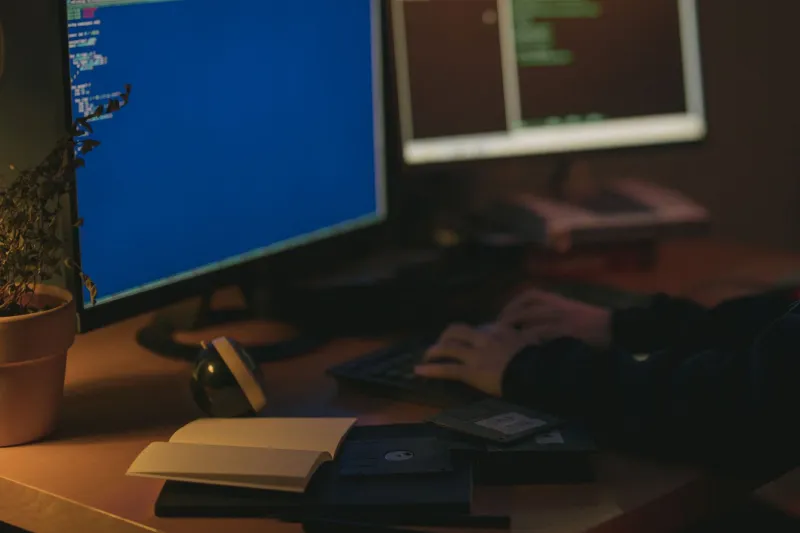
The Slack ping lands at 1:47 a.m. Eastern. Checkout service is throwing 500s. Your SRE is in Denver, asleep. Your staff engineer is on a flight to Austin in the morning. There's no one to ping, no one to whiteboard with. There's just you, a stack trace, and a browser tab with an AI assistant already warmed up.
If that scenario sounds familiar, you're not alone. Across US startups — especially the lean, post-layoff engineering teams of the last two years — the LLM has quietly become the default after-hours companion. And whether that's a superpower or a slow-motion liability is one of the more interesting questions in software right now.
The 2 A.M. Reality Check
Ask around and the pattern repeats. A backend engineer at a Boston fintech told me his first move during a midnight incident is no longer reading the logs — it's pasting the stack trace into his assistant and asking "what usually causes this?" A founder-operator in Seattle described debugging a Kubernetes crash loop solo at 3 a.m., talking through the problem with an AI like it was a rubber duck that occasionally quacks back useful suggestions.
The appeal is obvious. At 2 a.m., your cognition is shot. Reading dense documentation feels impossible. An LLM meets you where you are: it summarizes, it hypothesizes, it never sighs when you ask a "dumb" question. For solo founders and on-call engineers at small companies, that's not a luxury — it's often the difference between a 20-minute fix and a 3-hour spiral.
The Confidence Boost — and the Trap
Here's where the story splits. Used well, an AI assistant functions like a junior pair programmer with encyclopedic recall. It can remind you of that obscure flag, suggest a likely culprit, or translate a gnarly Go panic into plain English. That scaffolding builds genuine confidence. Engineers report feeling willing to tackle unfamiliar systems at night because the assistant lowers the activation energy.
But confidence and competence are different animals, and the trap is subtle. When you're exhausted, the path of least resistance is to accept the AI's first plausible explanation. Sleep-deprived brains are terrible at skepticism. The model confidently blames a caching layer; the real bug is a race condition. You spend an hour chasing the wrong lead not because the AI was malicious, but because at 2 a.m. you had nothing left to push back with.
The second risk is skill atrophy in exactly the situations where you most need raw debugging chops. If every incident starts with a copy-paste instead of a hypothesis, you're outsourcing the very muscle that senior engineers are paid for. The tool is fine. The dependency isn't.
A Field Guide for the 2 A.M. Session
If you're going to lean on an LLM during a production fire, a few habits separate the engineers who come out ahead from the ones who dig deeper holes:
- Narrate before you paste. Spend 60 seconds forming your own theory first. Then test it against the AI's. The friction matters — it keeps your judgment in the loop.
- Demand evidence, not vibes. Ask the model to point to the specific log line or metric that supports each hypothesis. If it can't, treat the answer as a lead, not a verdict.
- Timebox the rabbit hole. If two AI-suggested fixes fail, stop and escalate to a human, even if it means waking someone up. The cost of a 15-minute phone call is almost always cheaper than a 3 a.m. wrong turn.
- Write it down. Whatever the AI helped you find, capture it in your runbook. Otherwise the next 2 a.m. starts from zero.
So, Teammate or Crutch?
The honest answer is: both, depending on how you use it. The engineers I talked to who thrive treat the LLM as a accelerant on top of solid fundamentals — they already know how to read a flame graph; the AI just gets them there faster at 2 a.m. The ones who've gotten burned are the ones for whom the assistant replaced the fundamentals entirely.
There's also an organizational question lurking here. If your on-call rotation only survives because everyone privately relies on an AI chat window, that's an architecture problem and a staffing problem, not a productivity win. Tools should absorb the late-night burden — not become the reason nobody notices the team is running on fumes.
The 2 a.m. stack trace isn't going anywhere. But the teammate sitting next to you at that desk? That part is changing fast. Choose deliberately whether that teammate makes you sharper — or just makes it easier to stay solo, stay tired, and stay one bad hallucination away from a very long night.