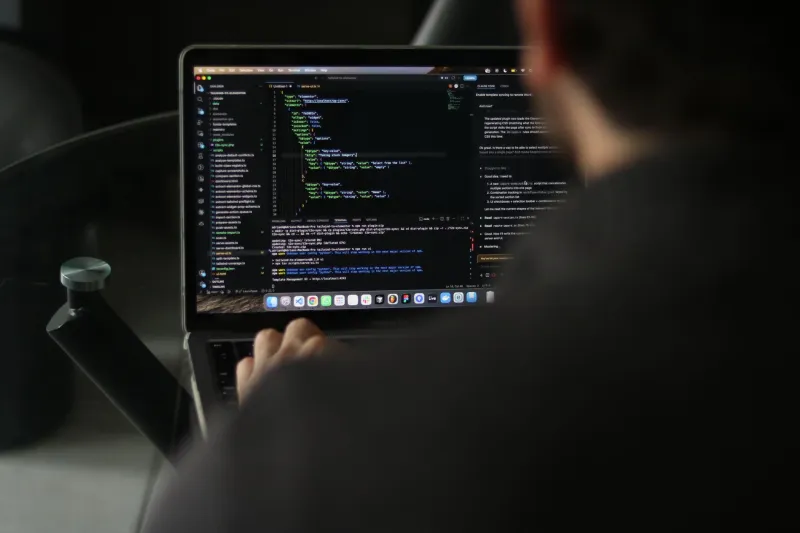
Your Next Coworker Doesn't Have a Text Editor: Life Inside the Agentic Coding Shift

Somewhere in Austin right now, a developer is asleep. Meanwhile, an agent she assigned at 6 p.m. is refactoring a payment module, running the test suite twice, and opening a pull request with a commit message that's — honestly — better written than most human ones she's reviewed this year.
She didn't open her IDE to make any of that happen. She wrote a ticket, hit assign, and went to dinner.
This is the agentic coding shift, and it's forcing an uncomfortable question for an industry built around the humble text editor: what happens to the IDE when the person it was designed for stops being the one doing the work?
From Autocomplete to Autopilot
The first wave of AI coding tools treated you like the engine and them like the turbocharger. You typed; they guessed your next line. That model — the glorified autocomplete — made sense because it matched how developers already worked.
Agentic tools flip the relationship. Instead of waiting for keystrokes, they take a goal: "Add rate limiting to the public API endpoints," or "Migrate these components off the deprecated library." Then they plan, edit files, execute commands, run tests, and iterate until something passes or they hit a wall worth escalating.
"The IDE was always a cockpit," says one tool builder we spoke with, who asked to speak candidly about where the category's headed. "Pilot in the seat, hands on the controls. Agents turn it into a mission control. You're not flying anymore — you're approving flight plans."
That's not marketing spin. Developers on teams experimenting with background agents describe a real workflow change: mornings spent reviewing overnight PRs instead of writing code, afternoons spent on architecture and code review rather than implementation grind.
The File Tree Is Looking Nervous
Here's the part that should make anyone in the IDE business sweat: agents don't need a beautiful editor. They need a terminal, a repo, and a CI pipeline. The graphical interface — decades of investment in panes, tabs, extensions, and themes — is largely decoration from an agent's perspective.
That doesn't mean the IDE dies overnight. Developers still need to read code, debug gnarly production issues, and understand what their fleet of agents actually did. But the center of gravity is shifting from where you edit to what you orchestrate.
Some toolmakers see this clearly and are building for it — agent dashboards, diff review surfaces, sandboxes where autonomous work happens safely away from your main branch. Others are bolting agents onto existing editors and hoping the muscle memory holds.
What Developers Actually Say
The early adopters we heard from land in two camps.
The enthusiasts describe a productivity jump that's hard to argue with. One engineer at a mid-size fintech startup in Denver said his team now delegates roughly a third of sprint tickets to background agents, reserving human brainpower for design reviews and the weird, ambiguous problems that don't fit neatly into a ticket.
"I stopped thinking of myself as a coder," he told us. "I'm a technical director with a very fast, very literal junior staff."
The skeptics push back hard on that framing. They point out that agents still choke on large, messy codebases; that a confident-looking PR can hide a subtle logic error no test catches; and that someone still has to understand every line that ships — because production incidents don't care who or what wrote the code.
"Reviewing an agent's work is its own skill," one staff engineer warned. "And most of us are bad at it, because the diff looks right. That's the trap."
So Where Does That Leave You?
If you're a working developer, the practical takeaway isn't panic — it's positioning. The skills that compound in an agentic world look suspiciously like the ones that always mattered: system design, clear written communication, code review judgment, and the ability to break a fuzzy business need into a spec a machine can execute.
The skills that depreciate? Raw typing speed, memorized API syntax, the satisfaction of grinding through boilerplate. Machines are getting genuinely good at all three.
And if you're attached to your IDE — the keybindings, the color scheme, the seventeen extensions tuned over years — don't worry. It's not going anywhere soon. But its job is quietly changing from the place where work happens to the place where work gets checked.
The environment isn't dead. It's just getting its first employees.
What's your take — are you delegating full tickets yet, or keeping your hands on the keyboard? The comment section's open.